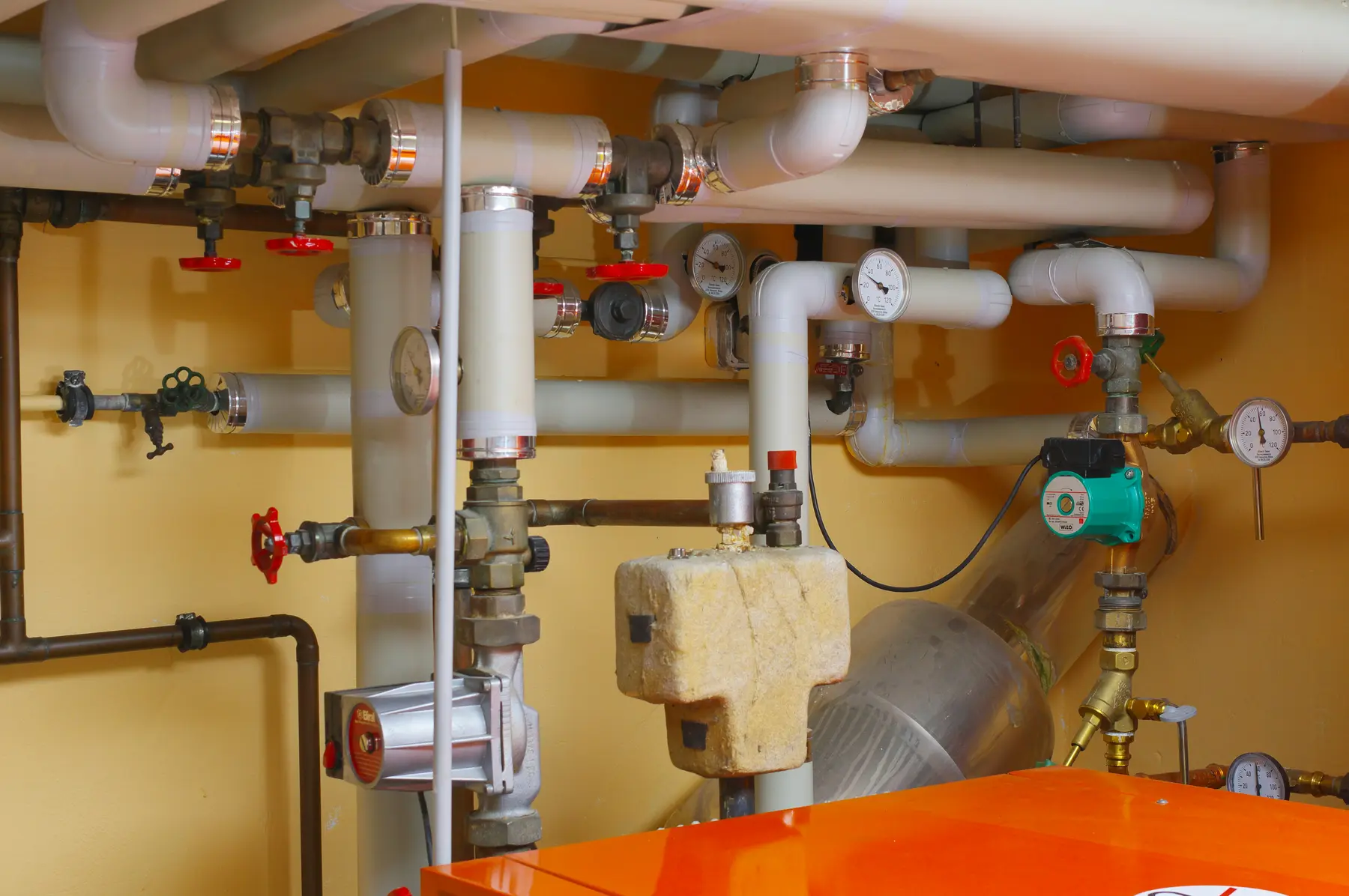
Glycol gets added to a hydronic system to solve one problem, usually freeze protection, and it’s easy to treat the fluid choice as an afterthought once that box is checked. But propylene and ethylene glycol behave differently enough, in toxicity, thermal performance, and cost, that the choice is worth making deliberately rather than defaulting to whatever’s on the truck.
The core tradeoff
Ethylene glycol has better thermal transfer properties and lower viscosity at low temperatures than propylene glycol, which is part of why it remains common in industrial and infrastructure applications where performance is the priority and the fluid stays fully contained. The tradeoff is toxicity. Ethylene glycol is generally avoided where incidental contact with food or drinking water is possible because of its higher toxicity. Propylene glycol is the lower-toxicity option, and certain propylene glycol formulations, including DOWFROST, are made with food-grade raw materials that conform to FDA CFR 21 and NSF guidelines and are intended for systems where incidental food contact is possible.
That tradeoff, toxicity risk versus thermal performance, is often one of the first factors that should drive the choice before the rest of the fluid specification is worked through.
What the numbers actually look like
Dow’s DOWFROST, a food-grade propylene glycol fluid, is formulated at 96 percent food-grade propylene glycol with food-grade corrosion inhibitors. When mixed with water at the appropriate concentration, DOWFROST can provide freeze protection below -50°C (-60°F) and burst protection below -73°C (-100°F). It’s made with Dow’s PuraGuard propylene glycol, a pharmaceutical-grade material with purity above 99.8 percent, and it’s compliant with FDA CFR 21 and NSF guidelines for incidental food contact.
On the ethylene glycol side, Dow’s DOWTHERM SR-1 is formulated at 95.5 percent ethylene glycol with an industrial corrosion inhibitor package, dyed fluorescent pink specifically to make leak detection easier, and rated for the same freeze and burst protection thresholds as DOWFROST when mixed with water at the appropriate concentration. Dow’s DOWCAL line spans both chemistries: DOWCAL N is a propylene glycol-based fluid with low acute oral toxicity, FDA GRAS ingredients, and NSF approval, while DOWCAL 100 is ethylene glycol-based and aimed at industrial, construction, and infrastructure applications, with a recommended operating range from -50°C to 175°C.
Where this shows up in a real specification
Applications with a credible food or drinking water contact risk generally favor propylene glycol, even though it is usually more viscous and can impose a heat transfer and pumping penalty. Fully closed industrial loops with no realistic contact pathway are stronger candidates for ethylene glycol, where lower viscosity and better heat transfer performance matter more.
Purity matters more than it might seem, too. Dow notes that lower-purity or recycled glycol streams may introduce impurities that affect toxicity, odor, foaming, and fluid life, which is why fluid purity, not just glycol type, belongs on the specification alongside freeze point and inhibitor package.
Specifying heat transfer fluids for a hydronic or process system?
Blackmore and Glunt provides sales and specification support, technical training, local inventory, and post-sale startup and warranty service for the manufacturers we represent, including Dow. Contact Blackmore and Glunt to talk through a project.